
If you already work with peptides, you know the risk sits in the supply chain. I look at research peptides through a quality and documentation lens first. Purity, testing, and traceability matter more than price or marketing. That is how I evaluate any research peptide supplier, including those operating in the United States. I also pay attention to how transparent a supplier is with published data and how easy it is to verify claims.
One of the first things I review is whether the supplier provides open access to research context and analytical proof, such as what is available in the research library offered by Molecular Peptides, because it shows how seriously they treat academic and laboratory use.
This guide walks you through how I think about buying research peptides online, what standards matter, and how to assess a peptide research supplier without guessing.
Why Research Peptides Quality Matters
Research peptides are used in controlled laboratory and in vitro environments. Small differences in synthesis, storage, or purity can affect outcomes. I always advise treating peptide research chemicals as precision inputs.
Poor quality research grade peptides can lead to:
- Unreliable data
- Inconsistent replication
- Wasted time and resources
- Invalid conclusions
That is why I focus on suppliers that maintain strict purity thresholds and provide batch level documentation. Research peptides for sale should never require trust alone. You should be able to verify everything on paper.
What Defines Research Grade Peptides
Research grade peptides follow a clear set of standards. When I review a research peptide supplier USA based or otherwise, I look for these baseline criteria.
- Minimum stated purity of 98 percent or higher
- Third party analytical testing
- Batch specific certificates of analysis
- Clear labeling as research only chemicals
- Documented synthesis and testing methods
If any of those pieces are missing, I move on. Buying research peptides online should feel controlled and professional, not vague.
How I Evaluate a Research Peptide Supplier
I approach supplier evaluation the same way I approach research planning. I remove assumptions and rely on evidence.
Here is what I look for every time.
Transparency and Documentation
A peptide research supplier should publish certificates of analysis for every batch. These documents should include purity confirmation, identity verification, and the analytical methods used. If a supplier hides this or requires extra steps to access it, that raises concerns.
Manufacturing and Testing Standards
I check whether peptides are synthesized by qualified manufacturers and tested using validated methods. UV and HPLC analysis are common standards. Clear documentation shows the supplier understands laboratory expectations.
Product Scope and Consistency
A serious research peptide supplier USA based often supports multiple research categories. This suggests stable sourcing and consistent production processes rather than limited or rotating stock.
Research Support and Education
I value suppliers that support responsible research by organizing peer reviewed studies and PubMed referenced material. This helps researchers understand context and design better experiments.
Why Molecular Peptides Stands Out
When comparing peptide supplier USA options, Molecular Peptides aligns well with how I evaluate suppliers.
They are a United States based research peptide supplier founded in 2026 with a clear focus on laboratory and institutional research use. All peptides are lyophilized and manufactured to a stated minimum purity of 98 percent.
Every product includes third party testing and a batch specific certificate of analysis. This allows you to confirm purity, identity, and analytical results before use.
Their catalog includes over 57 research peptides across categories such as:
- Tissue repair pathways
- Growth hormone related mechanisms
- Cognitive and neurological research
- Longevity and aging studies
- Metabolic and immune pathways
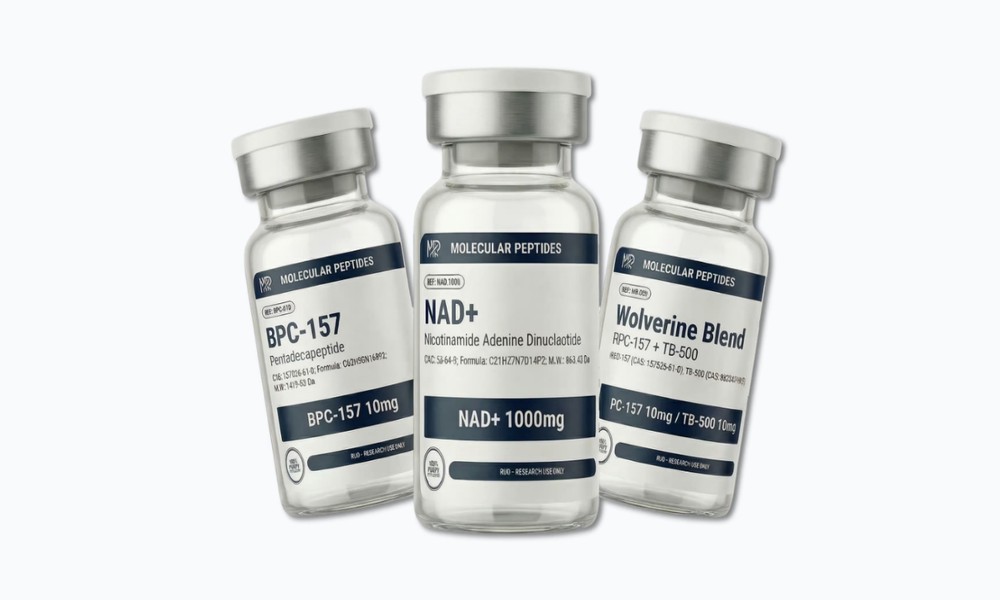
Commonly studied compounds like BPC-157, TB-500, NAD+, GHK-Cu, Epitalon, Semaglutide, CJC-1295, and Tesamorelin are clearly documented with purity data and vial details.
Research Blends for Multi Pathway Studies
Another aspect I pay attention to is how a supplier handles blends. Molecular Peptides offers pre formulated research blends designed for studying complementary pathways.
These blends are tested as complete formulations and include batch specific certificates of analysis for each component. Examples include combinations designed for tissue modeling, gene expression research, and endocrine pathway studies.
This approach reduces variability and supports controlled research design.
Research Library and Educational Support
I place value on suppliers that support learning without crossing into claims. Molecular Peptides maintains a research library that organizes peer reviewed studies by functional category.
Each entry summarizes mechanisms of action, research contexts, and published findings. The material stays educational and supports literature review rather than instruction. That separation matters in responsible research environments.
Ordering, Compliance, and Reliability
Operational reliability matters as much as product quality.
Molecular Peptides processes orders within twenty four to forty eight hours. Shipments are packaged securely and include tracking. Domestic delivery typically completes within five to seven days.
All products are clearly designated as research chemicals only. They are not intended for human or veterinary use. Certificates of analysis are available for every item, and purchasers must meet age and qualification requirements.
This structure shows attention to compliance and laboratory standards.
How You Should Choose a Research Peptide Supplier
When you buy research peptides, I recommend using a checklist mindset.
Focus on:
Molecular Peptides meets these criteria without relying on exaggerated language or unsupported claims. Their emphasis on transparency, documentation, and research integrity aligns with how I advise researchers to source peptide research chemicals.
If you approach peptide sourcing with evidence and standards first, you protect your work and your outcomes.