
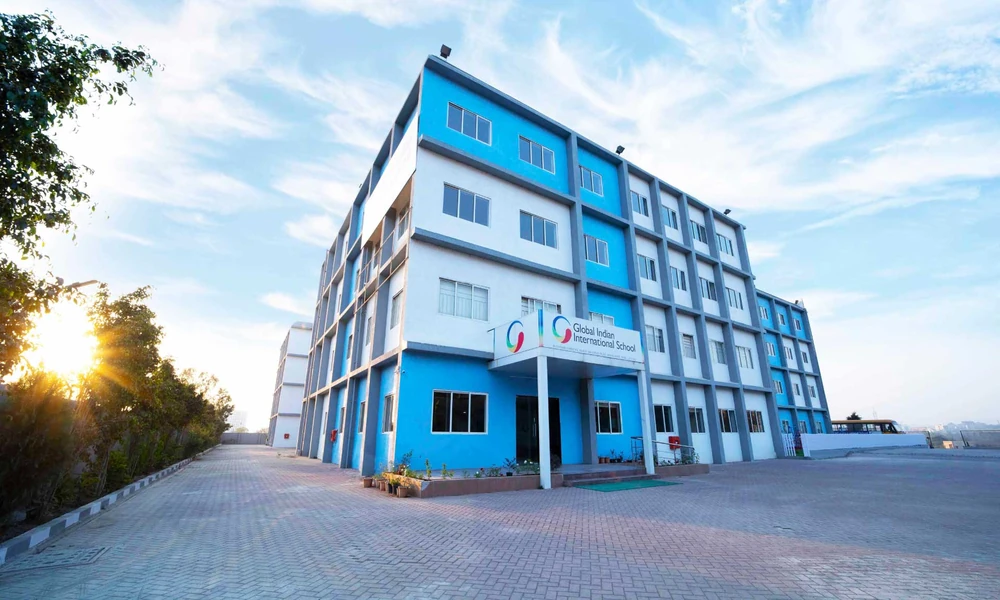
For families in Balewadi and the broader western Pune corridor, the school selection process has become more sophisticated and more important than it was a decade ago. The expansion of residential development, the growth of the professional population in this part of the city, and the widening range of school options available have combined to raise both the stakes and the complexity of the school selection decision. Parents who want to navigate from pre-primary school in Balewadi Pune through to a strong CBSE secondary pathway need a clear understanding of what to look for at each stage, how the stages connect, and what markers distinguish genuinely strong schools from those whose reputations rest more on marketing than on measurable educational outcomes.
What should parents look for in a pre-primary school in Balewadi Pune?
The pre-primary years, spanning nursery, junior kindergarten, and senior kindergarten, are the educational foundation on which all subsequent learning rests. The quality of the pre-primary school in Balewadi Pune a child attends shapes the foundational literacy and numeracy skills, the social and emotional competencies, and the fundamental attitude toward learning that the child will carry through the entire school journey.
The specific markers of quality at the pre-primary level:
- Trained early childhood educators: teachers in quality pre-primary programmes hold recognised early childhood education qualifications, not simply general teacher training. The specific knowledge of child development, play-based learning, and the Montessori or other informed methodology that the school follows is a professional requirement, not a preference
- Low child-to-teacher ratio: the ratio of children to adults in the pre-primary classroom directly determines the quality of individual attention, supervision, and adult-child interaction. Pre-primary classes in quality institutions maintain ratios of approximately 15 to 20 children per teacher with a teaching assistant, rather than the higher ratios that cost pressures might otherwise produce
- Play-based and hands-on learning: pre-primary education research is unambiguous on the superiority of play-based, hands-on, and exploratory learning over formal academic instruction for children below the age of six. Schools that introduce formal academic instruction with worksheets and rote memorisation too early are working against the developmental evidence, regardless of how structured and impressive the programme may appear to parents
- Progression planning: the best pre-primary schools have a clear and documented account of how the pre-primary programme connects to the primary years, what foundational skills the programme is designed to develop, and how those skills are assessed and tracked
How does the CBSE board curriculum work in Pune schools?
Schools in Pune CBSE affiliated institutions follow the curriculum framework prescribed by the Central Board of Secondary Education, which covers Classes 1 through 12 with a nationally standardised syllabus, prescribed textbooks, and a terminal examination at Classes 10 and 12 that produces the results that higher education institutions and employers use to assess academic achievement. The CBSE framework has evolved significantly in recent years, with the National Education Policy 2020 and the National Curriculum Framework 2023 driving a shift toward competency-based assessment, reduced rote memorisation, and a greater emphasis on critical thinking and application.
For families evaluating schools in Pune CBSE options, the most relevant questions are:
- How does the school implement the CBSE curriculum? A school that delivers CBSE through progressive, student-centred pedagogy produces different and typically better outcomes than one that delivers the same curriculum through rote instruction and examination coaching
- What are the school’s Board examination results? The percentage of students achieving distinction grades (above 90%) and the average score across all students provides the most objective available measure of academic effectiveness
- What higher education outcomes do graduates achieve? Where do the school’s Class 12 graduates go, and what does this reveal about the quality and aspiration of the school’s academic preparation?
What makes the best international schools in Pune stand out?
Best international schools in Pune are distinguished from the field by a combination of factors that together determine the quality of the educational experience:
- Faculty calibre and stability: experienced, qualified teachers who remain at the school long enough to deeply understand the curriculum, the student community, and the school’s culture are the single most important determinant of educational quality
- Student culture and community: the values, work ethic, and social culture of the student body shape every child’s daily experience as much as the formal curriculum. Schools with a strong student culture of curiosity, respect, and ambition produce different outcomes from those where academic disengagement or social pressures undermine the formal programme
- Infrastructure for the full educational programme: the laboratories, libraries, sports facilities, arts studios, and technology infrastructure that support the full range of learning activities the curriculum and extracurricular programme require
How should Balewadi families compare the school options?
The comparison of top schools in Balewadi and across western Pune requires families to visit schools in session, speak with current parents whose children are at the relevant age and stage, and review independently verifiable indicators of educational quality rather than relying on school-generated marketing material. The school selection is among the most consequential decisions a family makes for a child’s development, and the quality of the research invested in it should reflect that importance.
Families comparing schools in Balewadi should consider how well each institution supports a child’s development from the early years through secondary education. Teaching quality, curriculum delivery, student wellbeing, academic outcomes, infrastructure, location, and continuity between educational stages are all important factors. Campus visits, conversations with current parents, and a review of verifiable academic information can help families choose a school that suits their child’s learning needs and long-term educational goals.